Commitment to the Environment
Agave:
Rey Campero (King of the Countryside) have established a name for themselves, for their delicious mezcales which are made primarily created from wild agaves. The Sanchez recognize that without maguey there is no mezcal. As a family they are committed to bioconservation and protecting the biodiversity of wild and cultivated agaves within the region in and around Candelaria Yegolé.
While the Sanchez have always cultivated agave, it wasn’t until 2013, that the they took the first major step towards getting more aggressive and taking a stand on this matter. They expanded their nursery by planting approximately 8,000 bulbils, which are the bulb-like formations on the flowering stalk of mature agaves, of the A. rhodacantha, locally known as Mexicano. The Mexicano was selected because of its risk of extinction due to its popularity and overuse for mezcal production. These 8,000 agaves were then transplanted to their fields during the first rains of 2014. In addition, 10,000 bulbils of Mexicano were planted in the nursery in 2014 and then transplanted in 2015. The Sanchez’s nursery expanded even further in 2015 with the planting of 3,000 Cuishe (A. karwinski) seeds, 1,500 Tepextate (A. marmorata) seeds, and 5,000 Mexicano bulbils. The year 2016 was a banner year for Destiladora Sanchez y Asociados, in which their environmental and biodiversity efforts were kicked into high-gear and they modified their reforestation goals significantly.
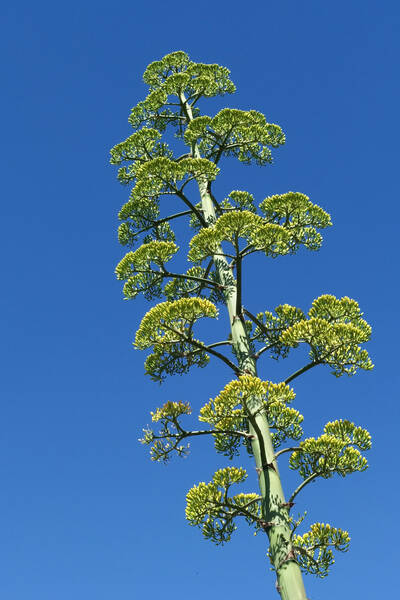
Sustainability for the Sanchez is way of life, not a cute buzzword that is being casually and cheaply bandied around by so many. Since first rains of 2013 through to the end of the rainy season of 2020, the Sanchez will have planted from seed, bulbs and hijuelos a little over 500,000 agaves:
- 9,400 A. karwinskii (maguey Cuishe)
- 3,000 A. karwinskii (maguey Madre Cuishe)
- 285,000 A. marmorata (maguey Tepextate)
- 43,000 A. rhodacantha (maguey Mexicano)
- 5,100 A. americana (a mix of magueyes Arroqueño, Blanco, Sierra Negra and Castilla)
- 600 A. cupreata (gifted from friends in Michoacán)
- 133,000 A. angustifolia (maguey Espadin).
- 23,000 A. potatorum (maguey Tobala)
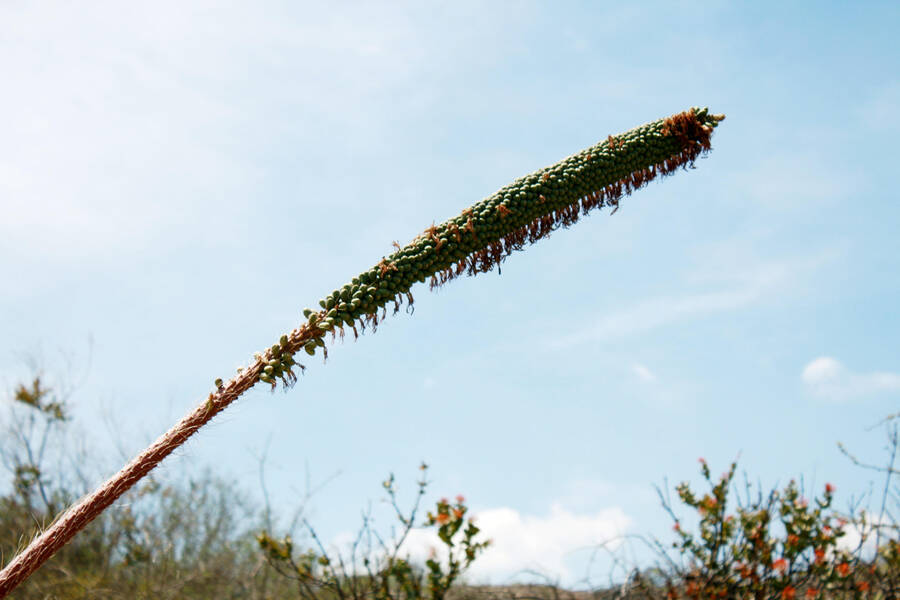
Not listed above, A. convallis (maguey Jabalí) has not been cultivated as of yet. This is due to the fact that the flower structures on the Jabalí are very different to those mentioned above. The flowers that form on this quiote do not have the typical branches and flower panicles but grow out of the side of the quiote. These wispy flowers are very small and delicate and produce tiny little pods, unlike the big pods found on the on the other agave from which they collect. The smaller pods also dry out at a much quicker rate, which means that when they get to the point to be able to collect the seed, they have either dispersed or with the slightest touch fall to the ground. The Sanchez family is actively experimenting with different techniques for their capture. Once collection is mastered, the next challenge they face will be learning how to germinate this unique agave specie’s seed. The Sanchez have surveyed their land and estimate that they can safely harvest 20-30 tons of maguey Jabalí per year without seriously impacting the natural population. Jabalí has been one of the most acclaimed and also best-selling mezcales that they produce, therefore the Sanchez family are undoubtedly committed to protecting the future of this species of agave.
While the sustainability and biodiversity of all agave is a critical component to the making of the Mezcal, the hardwoods utilized as a fuel source within the oven and distillation, must not be neglected. The conservation of these precious resources includes “Sauce”, “Mesquite” and “Encino,” are of utmost importance. To be more specific with regard to each tree mentioned:
- “Sauce “is a fast-growing tree that is very abundant along the banks of the local rivers and reproduces easily. This in turn lessens its scarcity and risk of depletion.
- The Mesquite employed comes from naturally fallen trees and there is no harvesting.
- The Encino is sourced from government regulated forestry operations, from the communal lands of San Francisco Coatlán, with certifications proving that it is harvested responsibly. https://bosquescertificados.mx/san-francisco-coatlan/