Heavy Métl
Search Bar
Process

First Selection
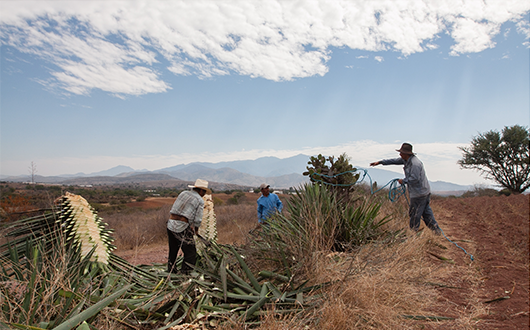
Our Master Mezcalero, Don Lorenzo Angeles, walks the fields in our region with the crew to select which mature maguey he deems meet our strict standards. Some maguey are passed up which unfortunately results time lost having to search out others. The upside is that these maguey are left to complete their life cycle, flower and seed.

Harvest
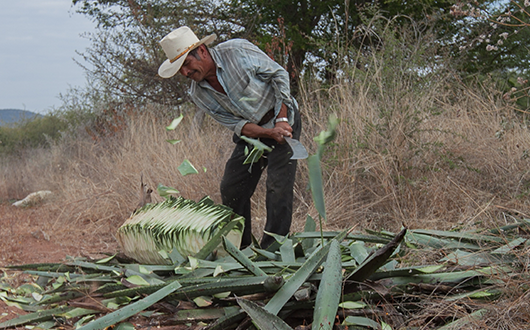
After Don Lorenzo has selected what he considers to be the ideal mature maguey native to the region; each one is then hand-harvested with a machete stripping it of the pencas or leaves. In the specific case of the Karwinskii varietals we carefully shave (labrar) down to the white of the piñas with machetes leaving no green matter. Some mezcaleros leave the green matter from where the pencas or leaves were attached. Each technique will result in different flavors. We believe that this extra step impacts our flavors in a positive way.

Roasting
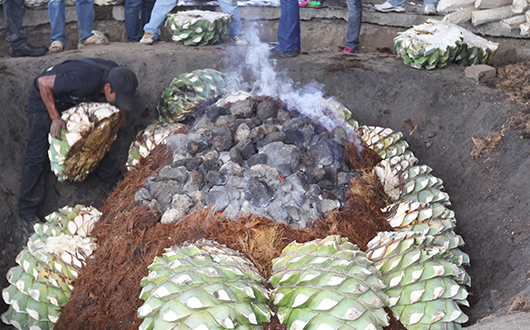
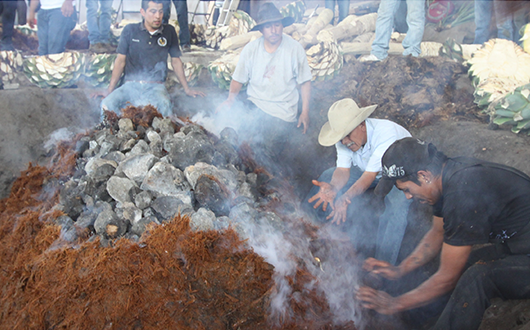
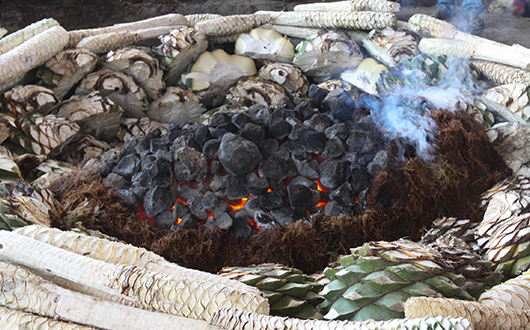
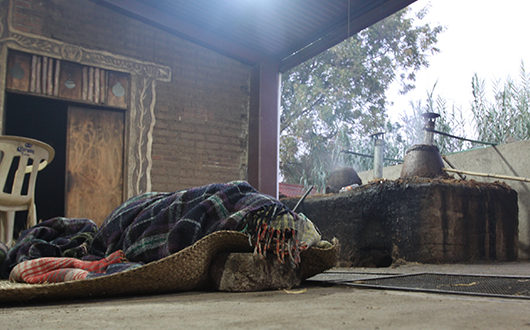
Early in the morning, around 4AM, the fire is built up in the conical earthen oven, the rocks are carefully selected and methodically placed over the burning mesquite and guamuche (Pithecellobium), and left for approximately 10 hours or until the rocks are glowing red. Once the rocks have reached the desired temperature they are then covered with “bagazo” or “guarape” as it is called in Minas, which is the very moist mash leftover from the most recent distillation. This is done in order to provide a layer of insulation and to help prevent the maguey from burning during the 4-5 day cooking cycle. The magueys are then stacked systematically one-by-one in the oven. Due to the fact that our productions are small, more often than not we roast several varieties of agave together. We always roast our “field blends” together. After the agave have been placed in the oven, a layer of dry “guarape” or mash is used to cover the maguey before they are covered with woven palm mats (petate). Once the palm mats are in place, the mound is covered with approximately 636 cubic feet of dirt, which will trap the heat in the oven during the roasting. When covering the mound with the soil we leave a hole in the center, once it is all covered, approximately 10 gallons of water is poured through the hole that was left in the center and then it is sealed shut. This laborious process is completed with Maestro Lorenzo standing on top of the mound, where he says a prayer and ceremoniously places a wooden cross on top of the mound.

Resting
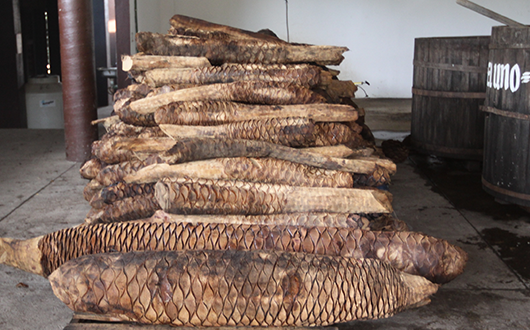
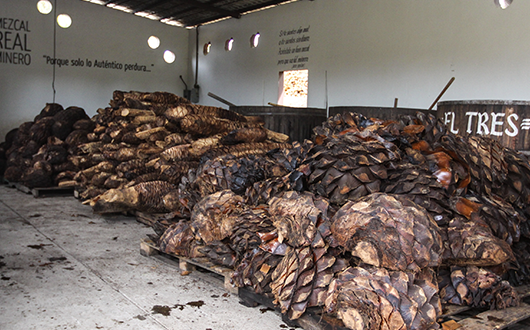
We rest certain maguey like the Espadin (Agave Angustifolia Haw), Tobala (Agave Potatorum) and Arroqueño (Agave Americana var. Oaxacensis) for 5 days prior to milling them. Our Karwinskii varietals (Largo, Barril and Tripon) are rested for up to 20 days, which is a practice many consider to be a waste of time. During the resting period, wild airborne yeast begin to form on the magueyes and in the case of the Karwinskii, which are left longer, the yeast is very prevalent often covering the maguey in blue, whitish, green mold like substance. The yeast that has formed begins to break down the sugars and begins the fermentation. After having rested the necessary time, the yeast that has formed is then brushed off before the magueyes move along in the process.

Second Selection
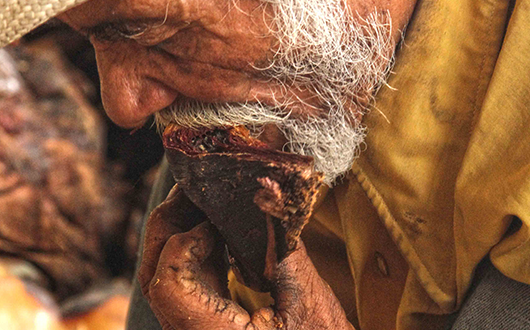
The second selection is one of the truly unique and critical steps in our processes and reflects as such in the quality of our mezcales. Maestro Lorenzo inspects the caramelized maguey first, by visually inspecting and then, by feeling them to ensure they are perfectly cooked (not burnt or undercooked but just right). Then each maguey is smelled to make sure they do not give off any bad aromas. The final step, which is extremely crucial to our process, is the tasting of each piece of the maguey for the proper sweet flavor perfection that is our signature. Any maguey that does not meet our criteria is discarded, which many in the industry see as wasteful. To us, it’s just one more guarantee of producing an exceptional mezcal.

Milling
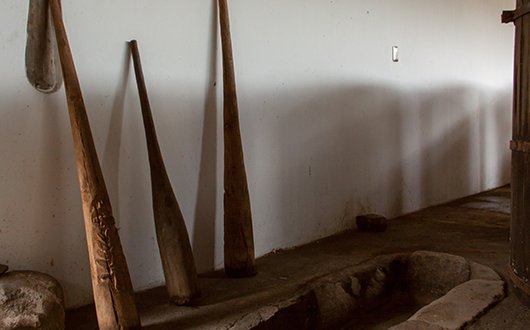
Due to the long-term health risks associated with mashing with mallets (back, knee, elbow and shoulder injuries), we have adopted a more modern technique for milling and use an electric shredder. This system allows us to mill one ton of maguey in 45 minutes to an hour. Our extremely limited releases are still made the traditional way by hand mashing with “mazos” or wooden mallets in a “canoa” or stone pit. The laborious process requires three men mashing for 8-12 hours to mill one ton of maguey. The vast time difference is because some magueyes are relatively much easier to mash by hand than others.

Fermentation
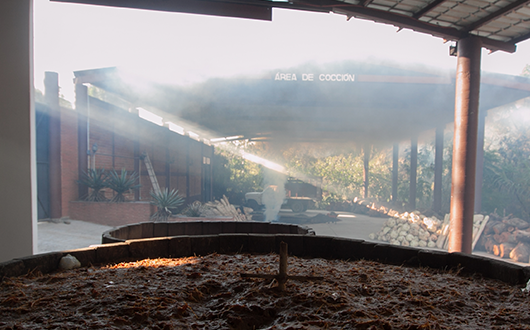
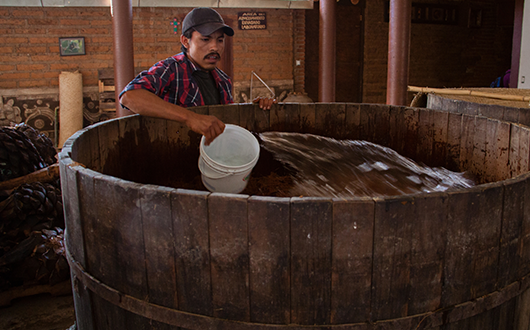
Once the maguey have been milled into a pulpy fiber, it is placed in open-air wooden vats (either Pino (pine) or Sabino (cypress), some water is added and it is left to take on wild airborne yeast which will break down the sugars and ferment the for approximately 8-10 days. It is this rich combination of wild yeast that have come in from the land where the maguey were harvested and the wild yeast that exist at our palenque that are significant contributors to the bold, complex flavors in every batch we produce. When people talk about mezcal blends some in the industry blend distinct productions to create flavors, what differentiates our “blends” of mezclas is the fact they are what we call “field blends” in that the magueyes have gone through the entire process together Roasting, Milling, Fermentation and Distillation.

Distillation
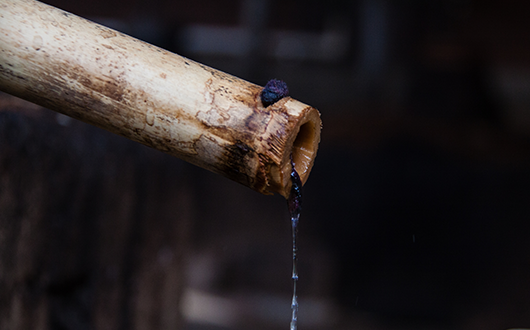
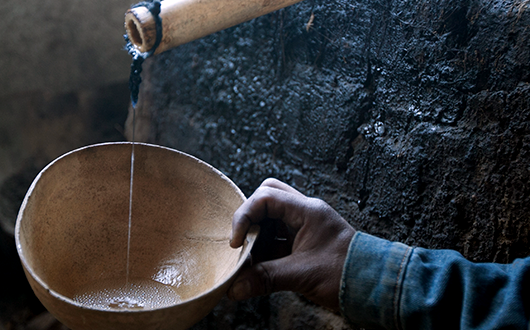
As previously mentioned we only use the ancestral “ollas de barro” or clay pot distillation, which has been in existence well over 400 years. There are some schools of thought that believe that this form of distillation predates the Spanish arrival in Mexico. Whether that is true or not, what is a fact is that this technique has been around for a long time and it produces approximately 60% less mezcal than the preferred the copper still. The distillation begins with the “mosto” or “guarape” (fermented agave and liquid from the vats) being loaded in to the lower clay pot. Then a second clay pot with a hole in the bottom three quarters the size of the circumference is affixed on top of the bottom pot. Then a “cuchara” or wooden spoon is suspended in the top pot and connected to a reed, which allows the mezcal to exit the clay-pot drip by drip into a catchment vessel. On the top of the clay-pot is a metal bowl with a copper bottom, which is cooled by fresh water. This causes the evaporating mezcal to condense and drip off on to the cuchara. Our mezcales are all twice distilled using the above-described technique and our world renowned, Pechuga, is triple distilled.
Final Product, Quality Control, & Embotellado
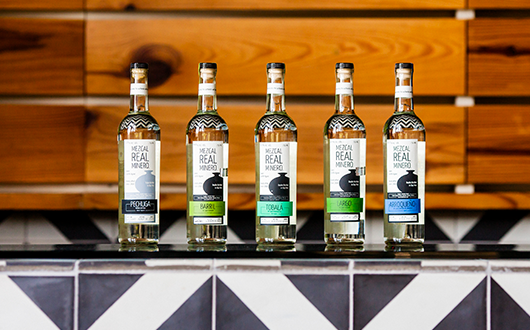
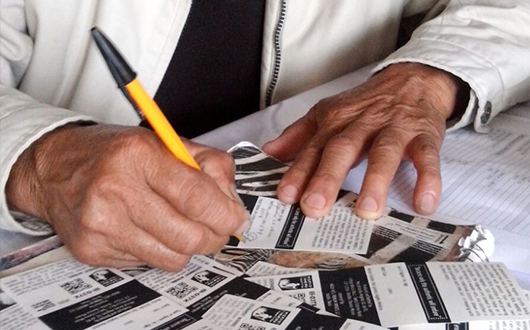
Don Lorenzo Angeles oversees, and literally signs off on, each bottle of our mezcal. Check the label for the lot number, individual bottle number, number of liters produced, specific maguey information, the year it was produced, and most importantly the original signature of our Master Mezcalero.
© 2026 Heavy MÉTl Premium imports, LLC. Website crafted with <3 in San Antonio, TX by GDG